Original: $4.64
-70%$4.64
$1.39The Story
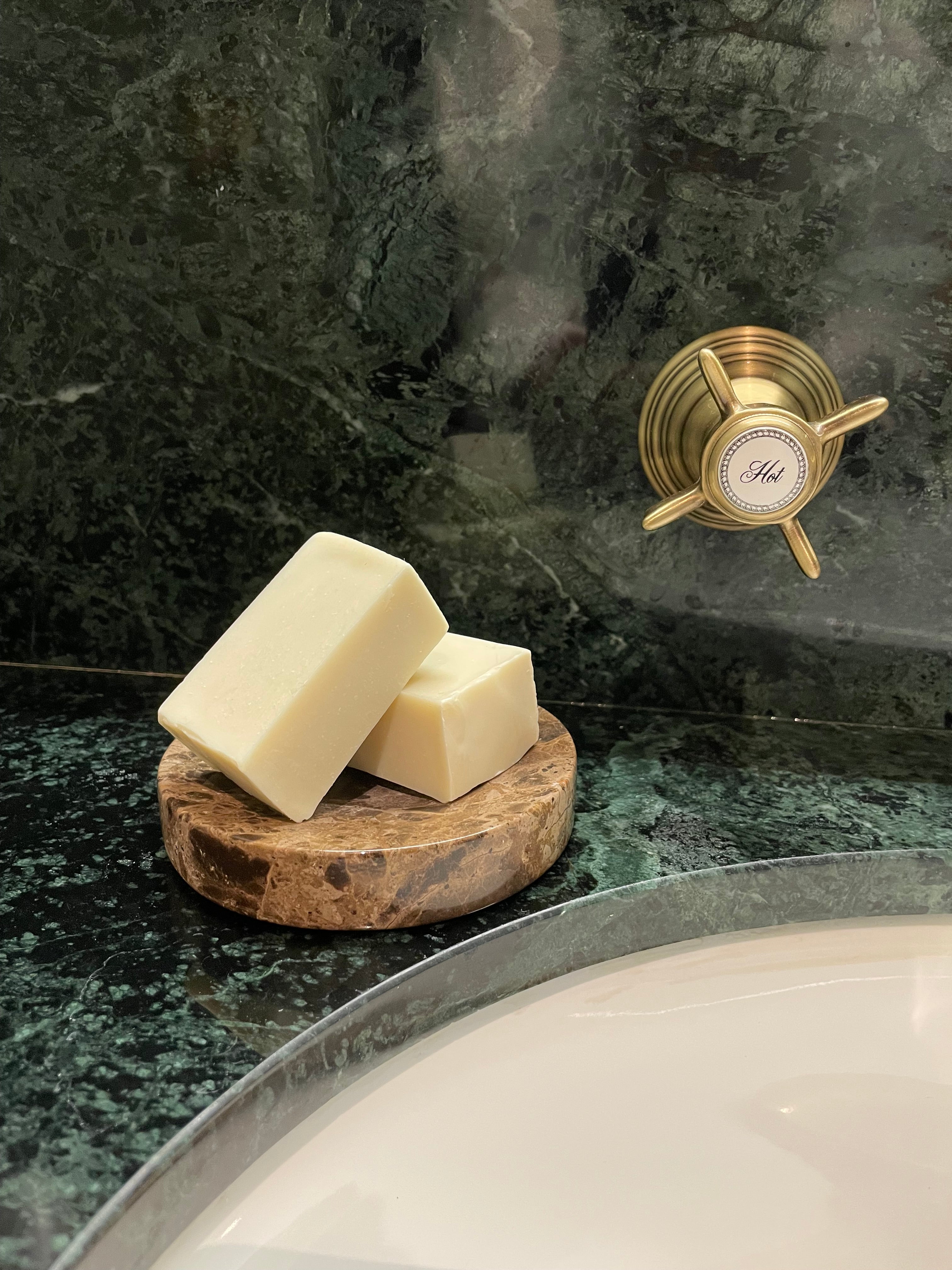
Our olive oil castile soap is made using pomace olive oil, which is basically the left-over olive oil after it’s been processed for food use. You know we hate waste, right? So this is perfect for us.
Castile soap has been around for hundreds of years. It is literally made with two ingredients and a catalyst: olive oil, water and lye.
The earliest evidence of soap making comes from Egypt from 2800BC. Aleppo became famous for soap made of olive oil and laurel oil. In the 12th century, Muslim and Jewish artisans who were fleeing persecution brought their soap making techniques to the Mediterranean, including Spain and Italy. These artisans found that although there were plenty of olives, they couldn’t get hold of any laurel oil, so they made it exclusively out of olive oil. Aleppo soap is quite hard, and is green with a slight antiseptic smell. It’s a very nice soap. But the soap that was made in Castille, using just olive oil, resulted in such a pure, creamy white soap that it became superior to its contemporaries. The soap’s purity and high quality made it popular with royalty across Europe.
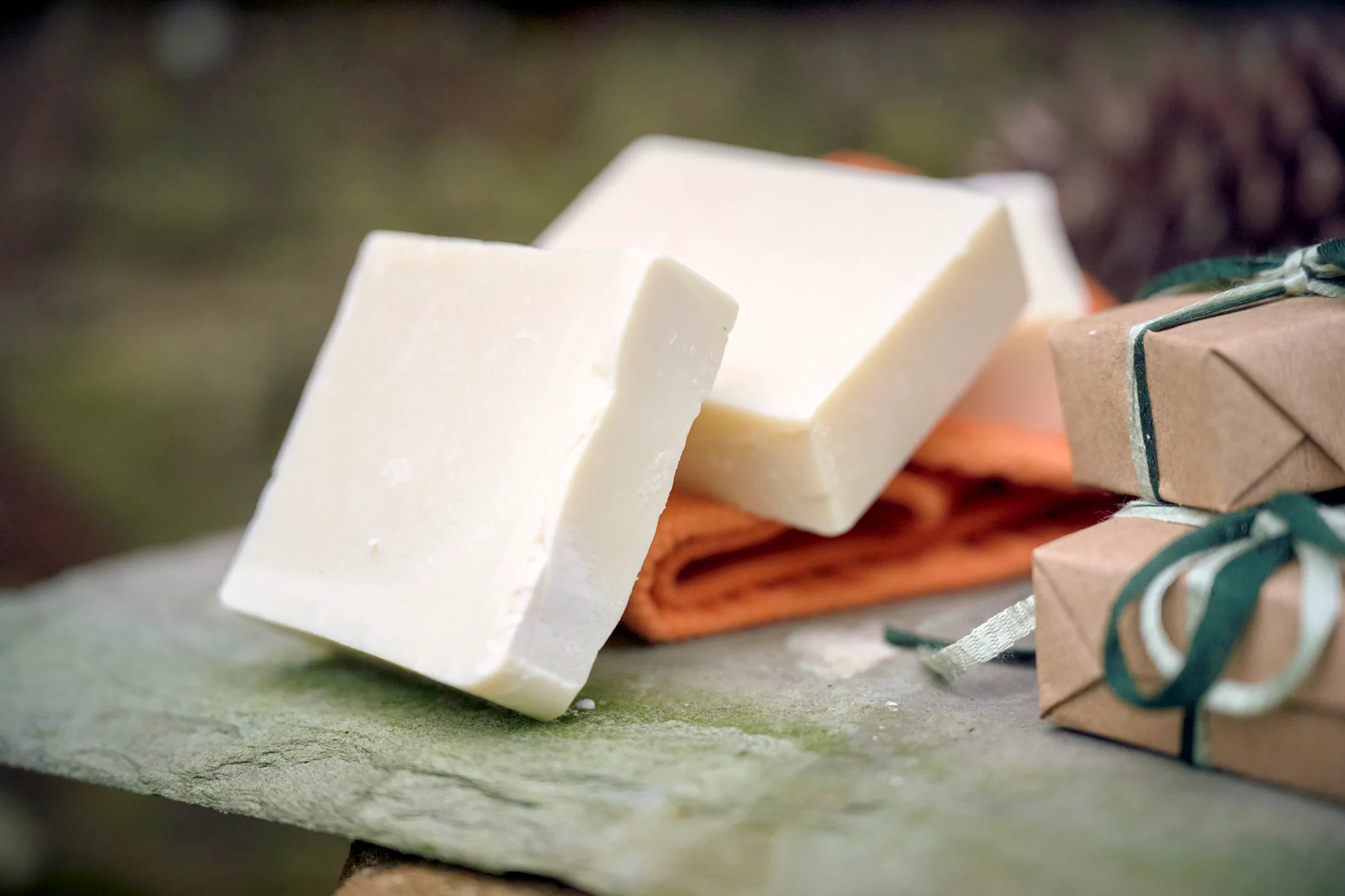
A lot of homemade soaps are laden with colours and perfumes. These are lovely. You can’t help sniffing a bar of soap. But I found that even natural, homemade cosmetics could irritate my skin. Even something simple like lavender oil. So I decided to keep it pure and super simple. It took a while to perfect, but I’m very happy with the results. Anyone who tries it says it’s surprisingly good. I don’t know what they were expecting, for this to be a surprise, but it certainly is good soap.
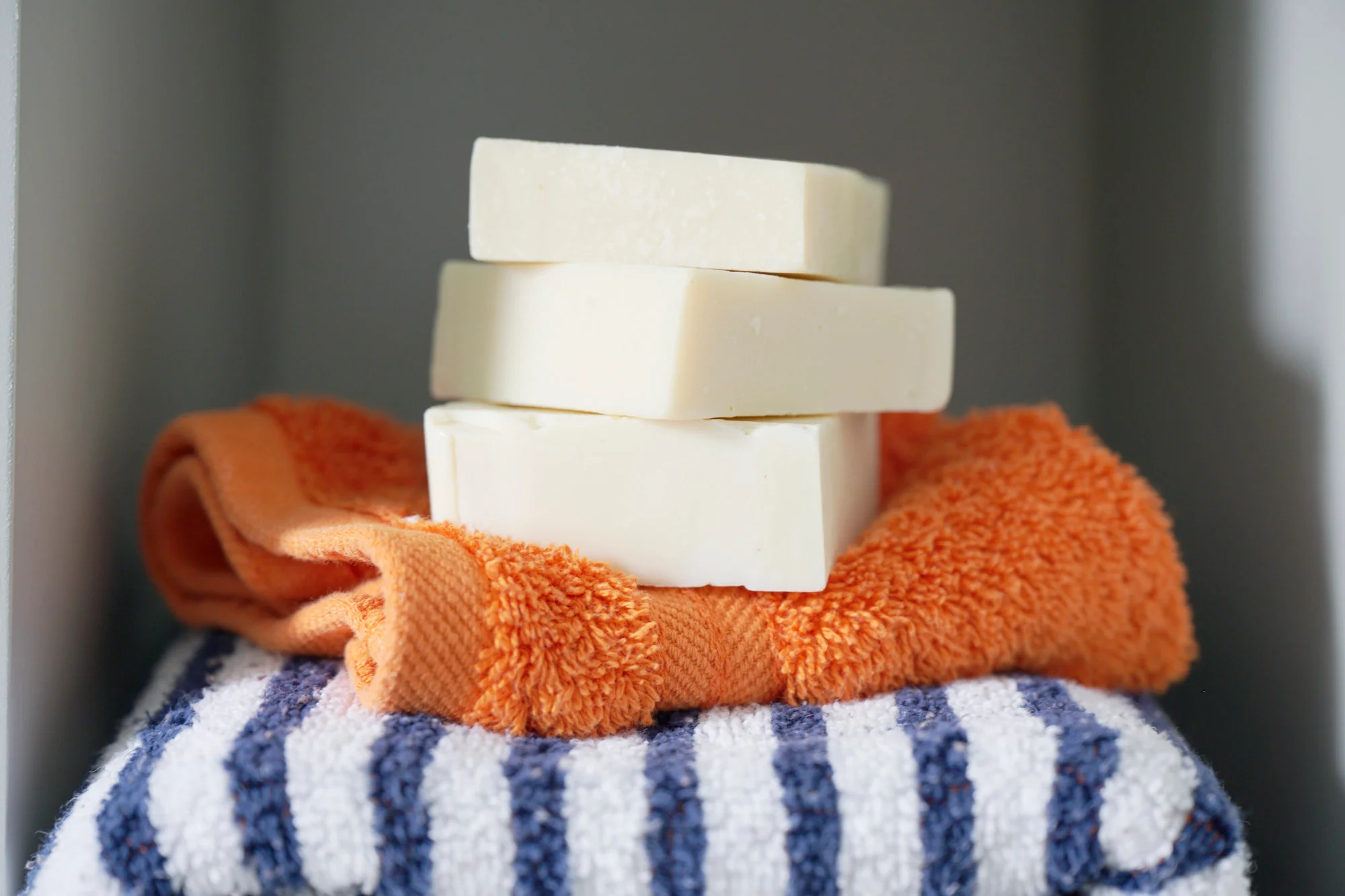
We make the soap ourselves in house. It’s made in small batches, and it has to be cured for several months, so it’s very much a limited edition product.
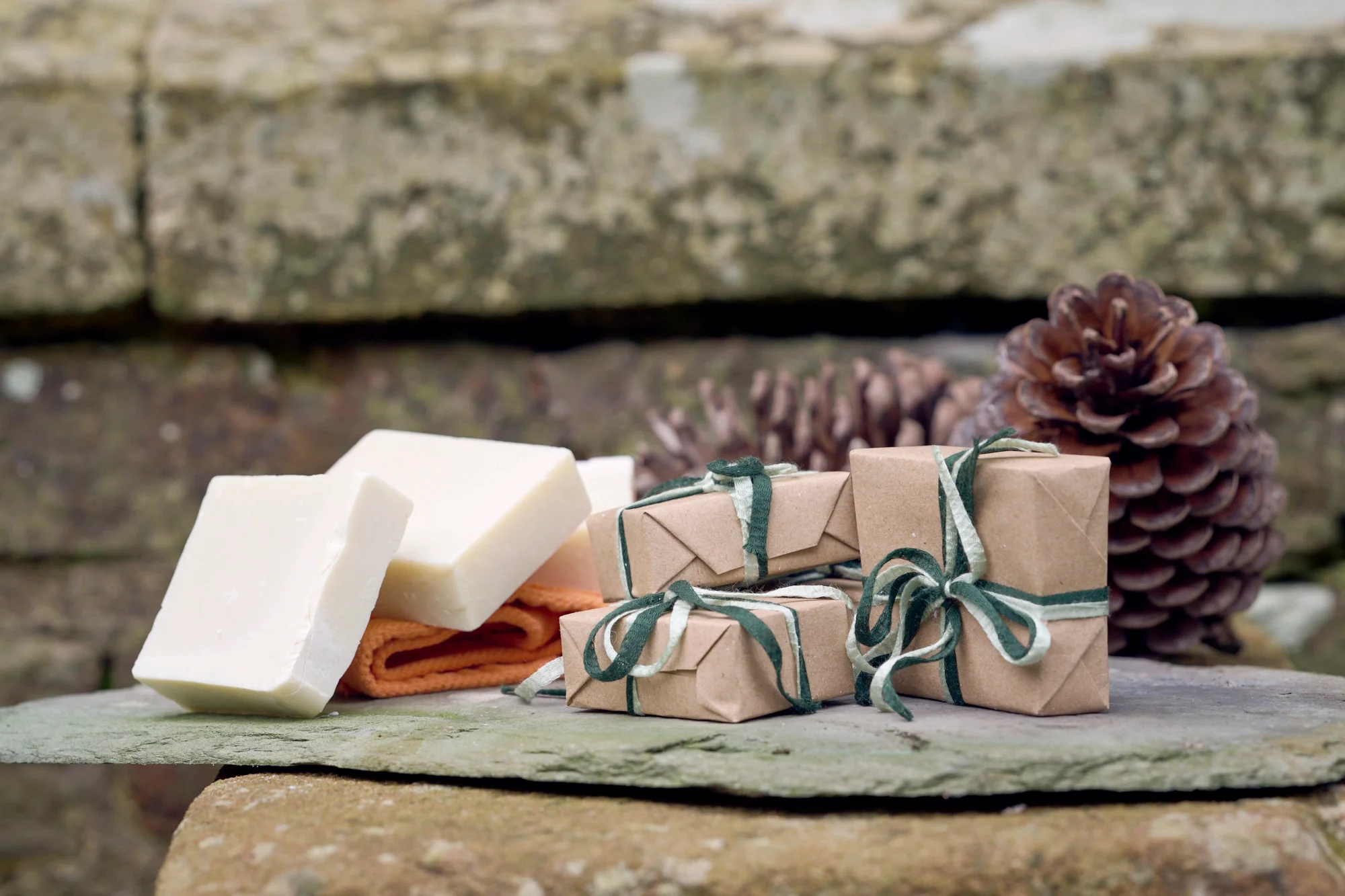
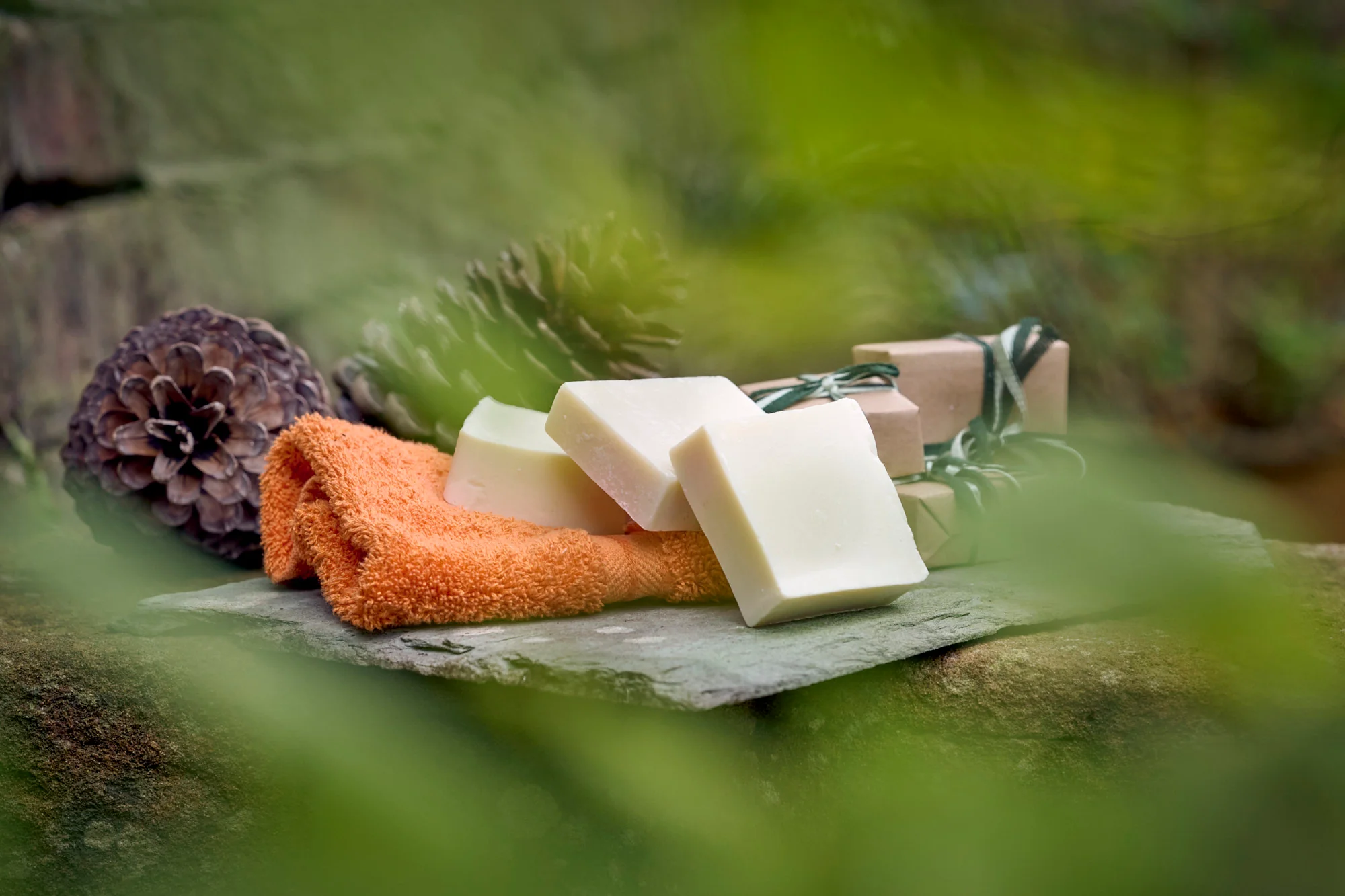
They are wrapped in brown paper tied with our eucalyptus tencel ribbon. The wrapped soap bars are pretty little things, whether you're getting them for yourself or someone else. Or both!
Directions for use:
Wet hands or the area to be cleaned, then apply soap and lather well by rubbing hands or the wet area together, ensuring that all surfaces are scrubbed, and finally, rinse thoroughly and dry.
If product enters eyes, rinse well with clean water.
Keep it in a soap dish with drainage holes, to maintain it in the best condition.
Details & Craftsmanship
Every detail has been carefully considered to bring you the perfect product.
Details & Craftsmanship
Every detail has been carefully considered to bring you the perfect product.
Details & Craftsmanship
Every detail has been carefully considered to bring you the perfect product.
Details & Craftsmanship
Every detail has been carefully considered to bring you the perfect product.
Description
Our olive oil castile soap is made using pomace olive oil, which is basically the left-over olive oil after it’s been processed for food use. You know we hate waste, right? So this is perfect for us.
Castile soap has been around for hundreds of years. It is literally made with two ingredients and a catalyst: olive oil, water and lye.
The earliest evidence of soap making comes from Egypt from 2800BC. Aleppo became famous for soap made of olive oil and laurel oil. In the 12th century, Muslim and Jewish artisans who were fleeing persecution brought their soap making techniques to the Mediterranean, including Spain and Italy. These artisans found that although there were plenty of olives, they couldn’t get hold of any laurel oil, so they made it exclusively out of olive oil. Aleppo soap is quite hard, and is green with a slight antiseptic smell. It’s a very nice soap. But the soap that was made in Castille, using just olive oil, resulted in such a pure, creamy white soap that it became superior to its contemporaries. The soap’s purity and high quality made it popular with royalty across Europe.
A lot of homemade soaps are laden with colours and perfumes. These are lovely. You can’t help sniffing a bar of soap. But I found that even natural, homemade cosmetics could irritate my skin. Even something simple like lavender oil. So I decided to keep it pure and super simple. It took a while to perfect, but I’m very happy with the results. Anyone who tries it says it’s surprisingly good. I don’t know what they were expecting, for this to be a surprise, but it certainly is good soap.
We make the soap ourselves in house. It’s made in small batches, and it has to be cured for several months, so it’s very much a limited edition product.
They are wrapped in brown paper tied with our eucalyptus tencel ribbon. The wrapped soap bars are pretty little things, whether you're getting them for yourself or someone else. Or both!
Directions for use:
Wet hands or the area to be cleaned, then apply soap and lather well by rubbing hands or the wet area together, ensuring that all surfaces are scrubbed, and finally, rinse thoroughly and dry.
If product enters eyes, rinse well with clean water.
Keep it in a soap dish with drainage holes, to maintain it in the best condition.