Original: $4.97
-70%$4.97
$1.49The Story
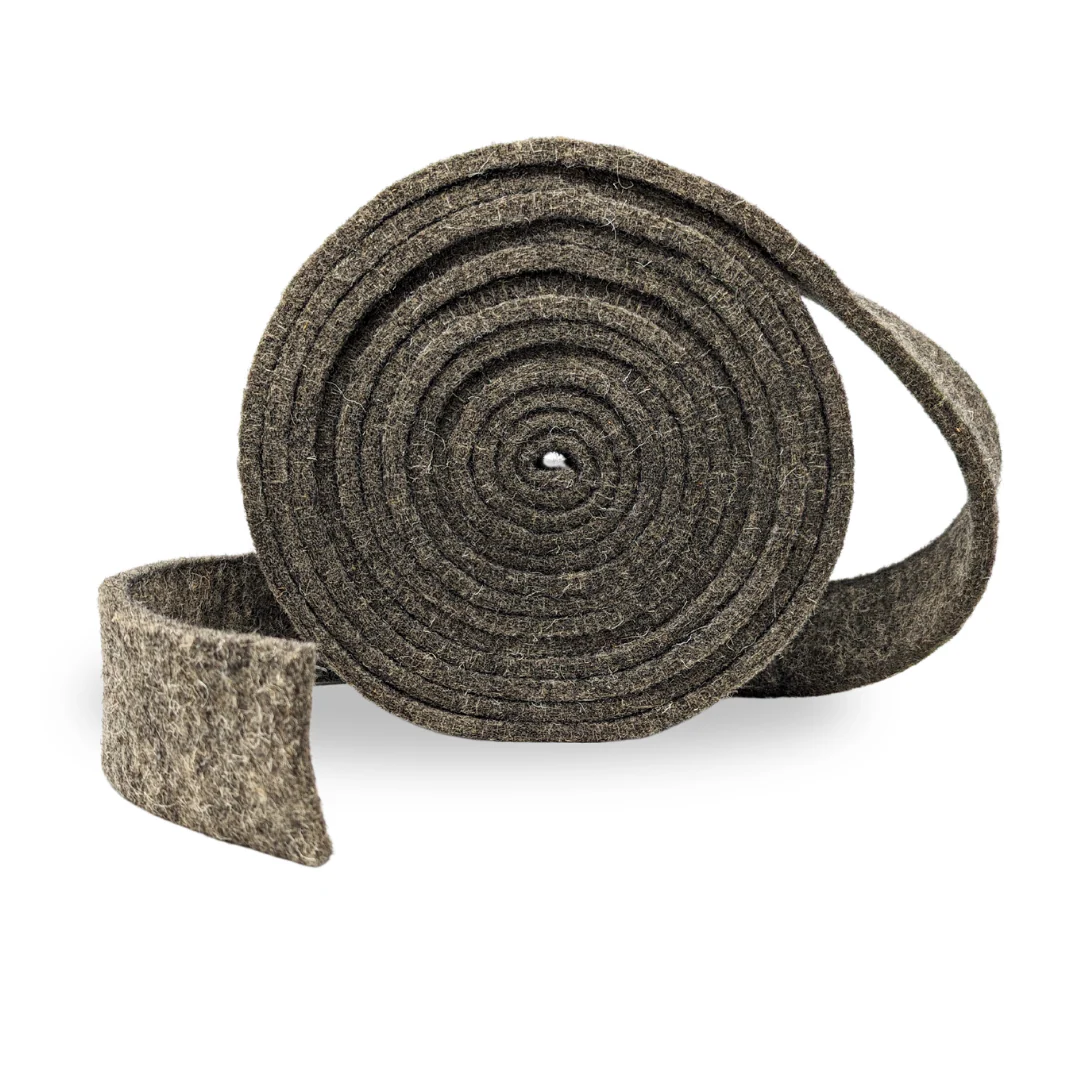
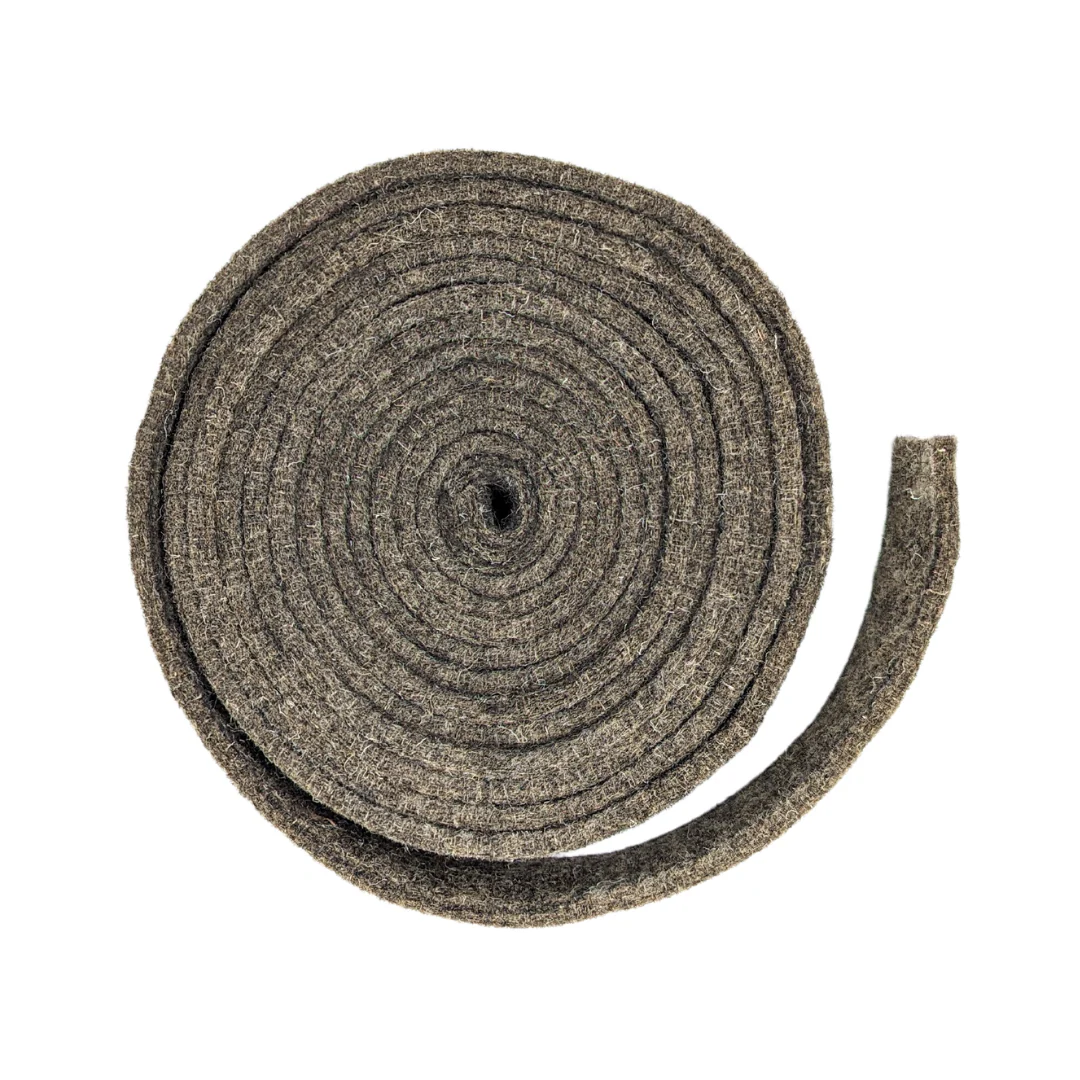
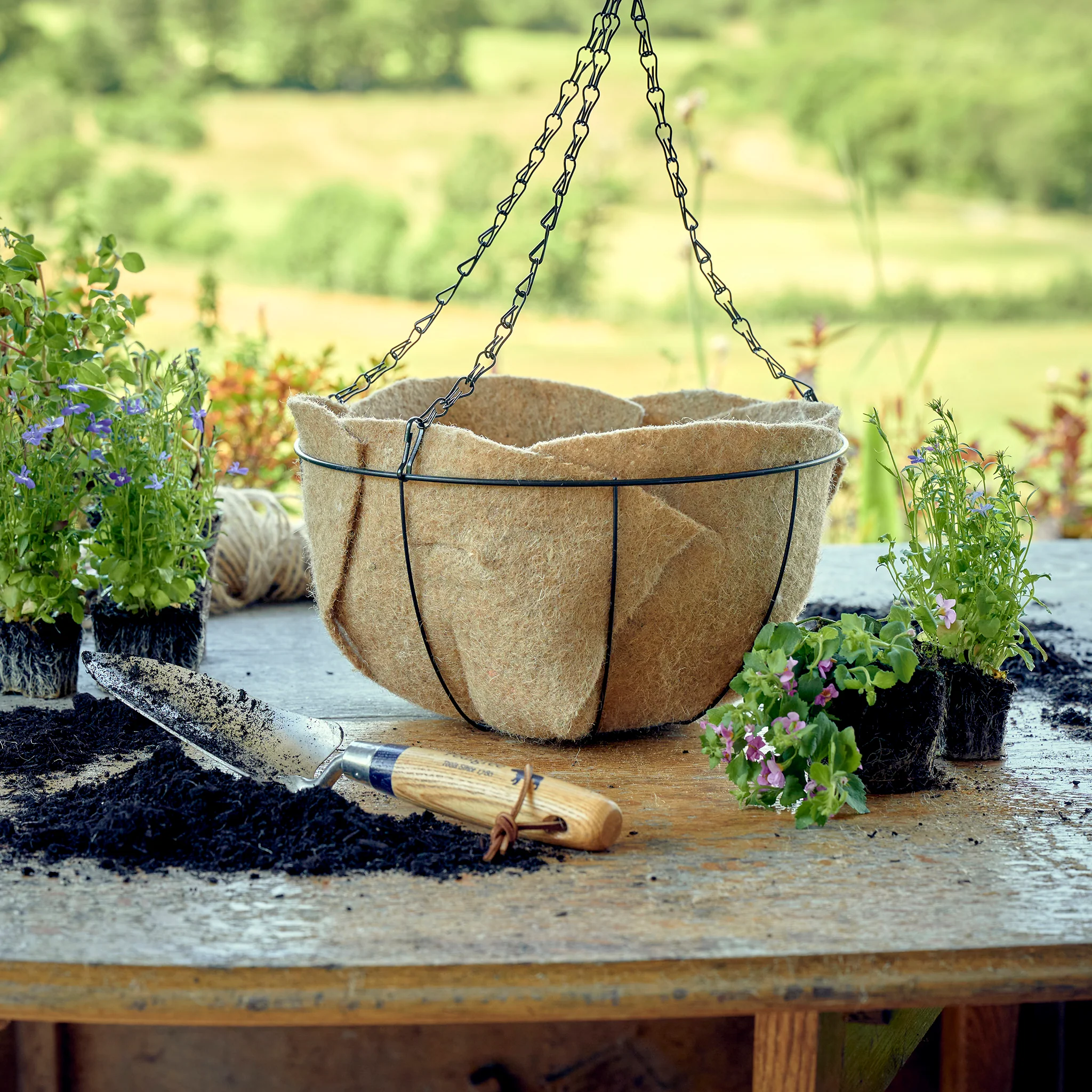
These robust hanging basket liners are made of 5mm thick felted jute. These are great because you can re-make them year after year. What I find with a lot of the shop bought ones made with a natural woven outer and plastic lined inner is they look great when you buy them, but only last a season and look really shabby whatever you try and do to rejuvenate them the following year. And what do we hate at Chimney Sheep? We hate waste of course! So using these biodegradable liners with wire framed baskets is an excellent way of making the basket last year after year, and you can have all the creative fun of making your own hanging baskets.
How to make your own gorgeous hanging basket
Step 1: get the correct sized liner for your basket. The liners are sold in pairs according to the diameter of the basket. So for example, a 14” liner is for a basket 14” in diameter. The actual liner itself is 22”.
Step 2: place the inner in the basket and fill it with compost and water retention pellets if you’re using them. Please try to avoid compost with peat in it. If it doesn’t say “Peat Free Compost” it’s probably got a percentage of peat in it. I totally recommend the Dalefoot Composts sheep wool compost as it’s the best peat alternative I’ve been able to find. We’ve got Kokoblock peat free blocks that are pretty good. We also have the brilliant organic sheep wool pellets, made of a mix of sheep wool and muck. These absorb water and slowly biodegrade, releasing valuable nutrients into your hanging basket or planter. Mix these with the compost and fill the basket to just below the top.
Step 3: now for the fun bit! Get it planted up. There are no hard and fast rules when it comes to hanging baskets, it depends very much on your own taste and what’s available. If you’re having to make do with what you’ve got to hand then you’re going to have to be a bit more creative anyway. A general *guidance* is to have an upright plant in the centre. Then depending on the size of the basket, a certain number of smaller flowering plants around this. So a 14” basket would have about 5 or 6, and increasingly more as the basket gets bigger. Then choose some trailing plants to go around the perimeter. There are holes in the liner so you can poke plants into the sides if you want to, but once the trailing plants get going they will dangle round the sides and cover the sides nicely.
Step 4: water everything well and leave in a warm, light place for the plants to grow into the basket and get the roots established for a bit before hanging it out.
Tips – if you haven’t got traditional hanging basket plants to hand, go a bit off-piste and get creative with what you’ve got. How about using trailing tomatoes instead of lobelia? Or a bit of ivy – these root really easily so pull a section off where it’s growing and push it into place. Try poking in cuttings from rosemary or lavender that self-root easily. If you’re thinning out certain plants, see if you can propagate them to use in your hanging basket. You could try scattering in some bee and butterfly friendly seeds to make it more attractive to visiting pollinators.
Description
These robust hanging basket liners are made of 5mm thick felted jute. These are great because you can re-make them year after year. What I find with a lot of the shop bought ones made with a natural woven outer and plastic lined inner is they look great when you buy them, but only last a season and look really shabby whatever you try and do to rejuvenate them the following year. And what do we hate at Chimney Sheep? We hate waste of course! So using these biodegradable liners with wire framed baskets is an excellent way of making the basket last year after year, and you can have all the creative fun of making your own hanging baskets.
How to make your own gorgeous hanging basket
Step 1: get the correct sized liner for your basket. The liners are sold in pairs according to the diameter of the basket. So for example, a 14” liner is for a basket 14” in diameter. The actual liner itself is 22”.
Step 2: place the inner in the basket and fill it with compost and water retention pellets if you’re using them. Please try to avoid compost with peat in it. If it doesn’t say “Peat Free Compost” it’s probably got a percentage of peat in it. I totally recommend the Dalefoot Composts sheep wool compost as it’s the best peat alternative I’ve been able to find. We’ve got Kokoblock peat free blocks that are pretty good. We also have the brilliant organic sheep wool pellets, made of a mix of sheep wool and muck. These absorb water and slowly biodegrade, releasing valuable nutrients into your hanging basket or planter. Mix these with the compost and fill the basket to just below the top.
Step 3: now for the fun bit! Get it planted up. There are no hard and fast rules when it comes to hanging baskets, it depends very much on your own taste and what’s available. If you’re having to make do with what you’ve got to hand then you’re going to have to be a bit more creative anyway. A general *guidance* is to have an upright plant in the centre. Then depending on the size of the basket, a certain number of smaller flowering plants around this. So a 14” basket would have about 5 or 6, and increasingly more as the basket gets bigger. Then choose some trailing plants to go around the perimeter. There are holes in the liner so you can poke plants into the sides if you want to, but once the trailing plants get going they will dangle round the sides and cover the sides nicely.
Step 4: water everything well and leave in a warm, light place for the plants to grow into the basket and get the roots established for a bit before hanging it out.
Tips – if you haven’t got traditional hanging basket plants to hand, go a bit off-piste and get creative with what you’ve got. How about using trailing tomatoes instead of lobelia? Or a bit of ivy – these root really easily so pull a section off where it’s growing and push it into place. Try poking in cuttings from rosemary or lavender that self-root easily. If you’re thinning out certain plants, see if you can propagate them to use in your hanging basket. You could try scattering in some bee and butterfly friendly seeds to make it more attractive to visiting pollinators.