The Story
So, a Hot Water Bottle?
Yes!... well, no?
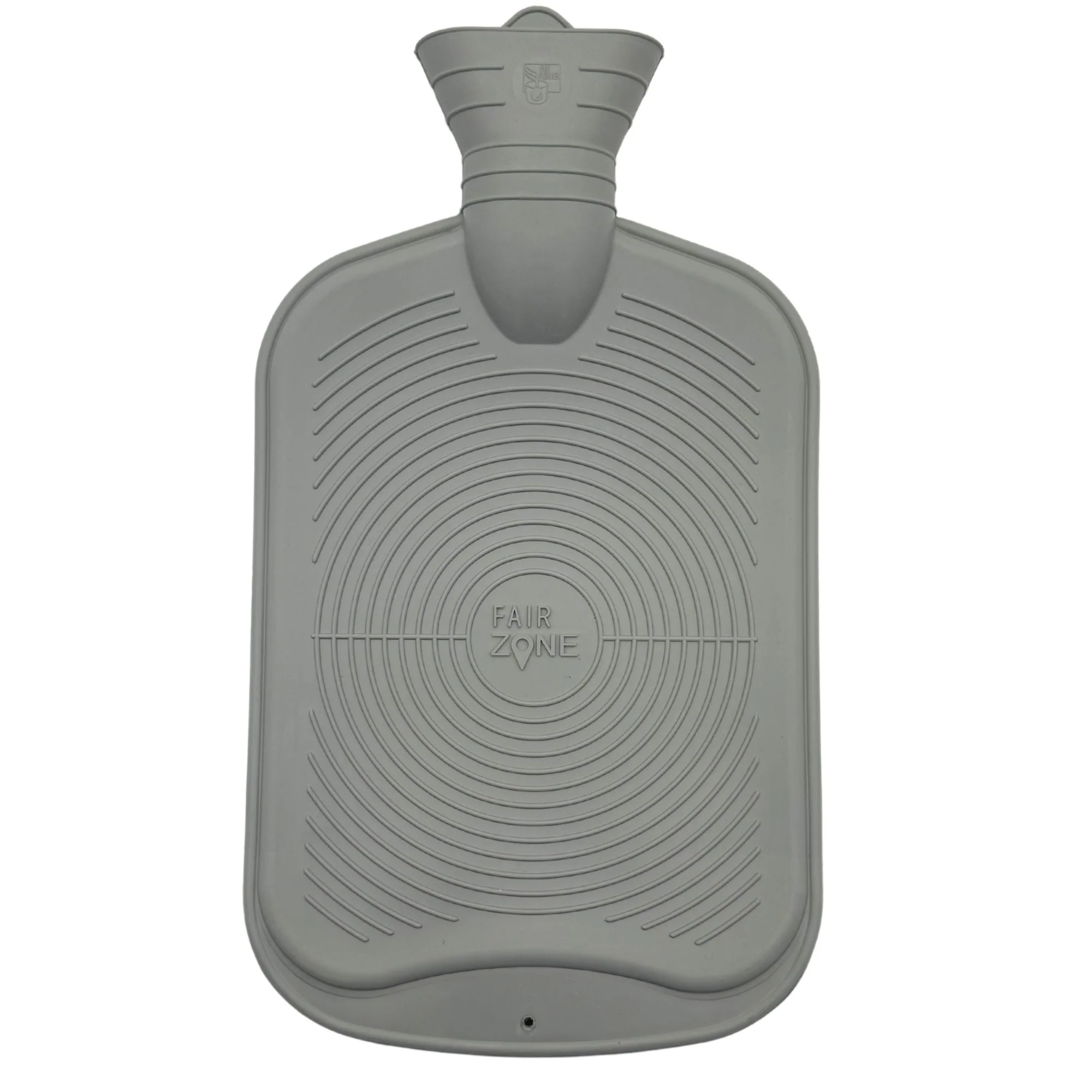
This isn’t just any old hot water bottle – it’s much more eco-friendly than that.
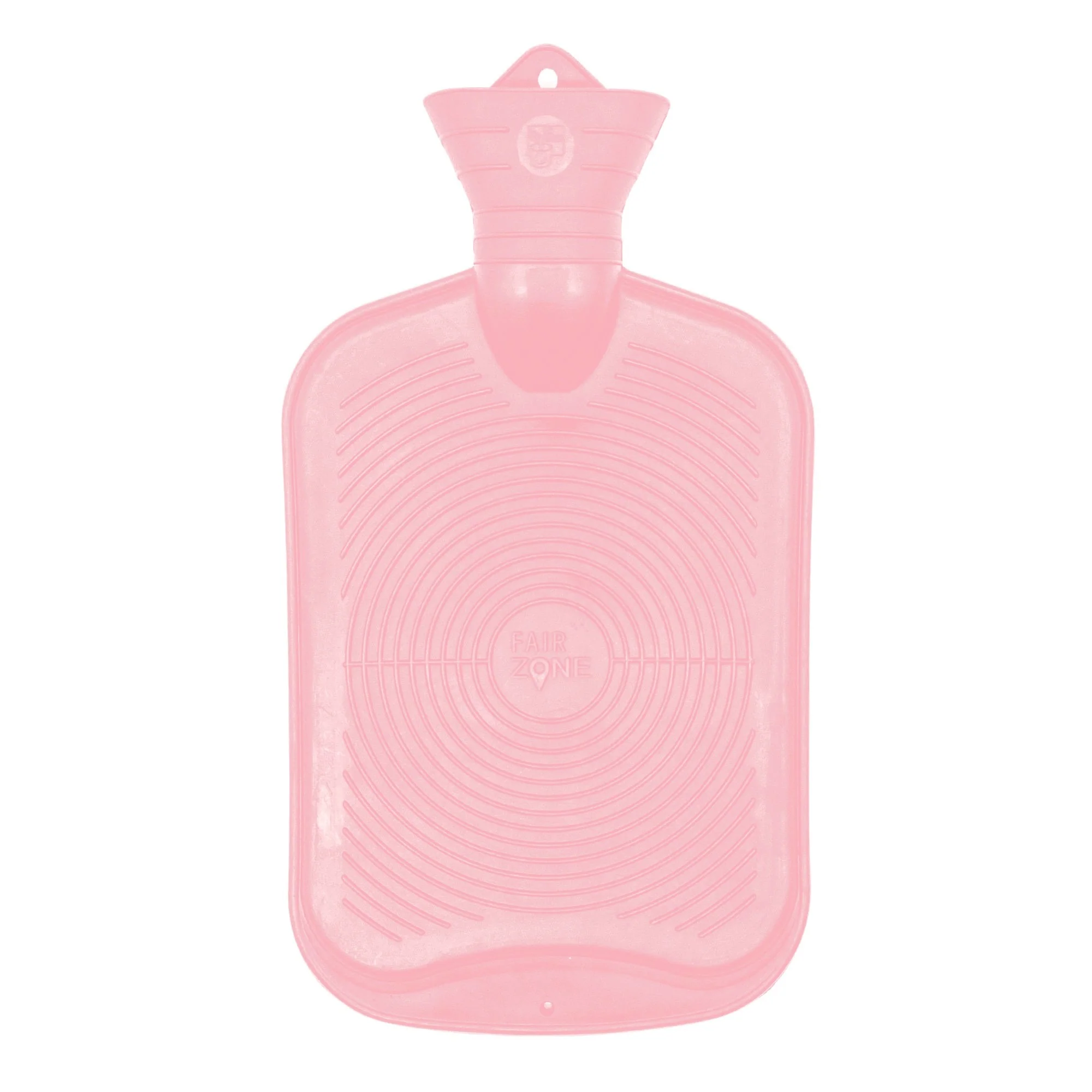
As you know, a hot water bottle is simply a heat retaining bottle that you fill with hot water, and it helps with easing pain or just keeping you (or your bed!) warm.
But not every hot water bottle is as green (quite literally) as ours. This Chimney Sheep-green hot water bottle is made using natural, FSC-certified rubber, hand-drawn by farmers in Sri Lanka. The Fair Rubber Association then ensures that companies pay a Fair Trade premium for every kilogram of rubber bought. Not only is natural rubber, well, natural... but it's sustainable, renewable and even biodegradable, as it comes from a plant source!
It is recommended that you replace your hot water bottles every 2-3 years, depending on how often you use them and how roughly they’re handled. This itself is a good enough reason why you should choose to buy a hot water bottle made from natural rubber, which is eco-friendly, sustainable and renewable, instead of one that’s made using rubber that’s man-made and harmful to our planet.
What’s the difference between natural and synthetic rubber?
Natural rubber is extracted from the “rubber tree” or Hevea brasiliensis, as latex milk. It is harvested by using a hooked knife and removing a thin layer of bark (about 6.4mm, or a quarter of an inch) in a downward half spiral of the tree trunk, allowing the latex to run down into a collecting cup. It takes a lot of skill to be able to tap correctly, but if done right, the tapping panel can yield latex for up to five hours. The farmers tap during the cool hours of the night or very early morning because when the temperature rises too much the latex will coagulate and seal the cut.
The rubber trees don’t need to be cut down to harvest latex, so rubber tapping is not damaging to the forests. Trees need to grow to be at least 6 years old and 6 inches in diameter before they’re ready to be tapped. Once they’re ready, they’re tapped about once every two days but are often rested, especially after a period of particularly heavy tapping. By doing this a tree can be useful for up to 20 years!
Natural rubber is seen as one of the world’s most essential raw materials and makes up about 30% of the total rubber used annually. It’s hard to say which is “better” when it comes to natural vs synthetic rubber, as both have different properties and are therefore better used in different applications, and both are probably more important than you might first realise (they’re used in medical devices, toys, aircraft and car tyres and all sorts of other things). But it’s easy to say which is better in terms of the environmental impact: natural rubber wins pretty easily. It’s sustainable and biodegradable, rubber trees absorb more carbon dioxide than even the tropical rainforest (because of their leaf density), and it lives a green life – throughout the harvesting, manufacturing, recycling and use.
Synthetic rubber, however, is not at all good for the environment and impacts it a significant amount. All kinds of synthetic rubber are made using petrochemicals such as petroleum and natural gas, using a process called vulcanisation (meaning to harden using sulphur at a high temperature, usually between 140-160°C).
During this process, a hydrocarbon mixture derived from petrochemicals is combined with natural gases to create different types of synthetic rubber. The production of synthetic rubber, like all things produced from non-renewable sources, contributes to our increasing GHG emissions and landfill pollution. In this way, synthetic rubber is just as bad as plastic products.
What is fair trade rubber?
The Fair Rubber Association was founded on June 21, 2012, with the aim to apply the principles of fair trade to products made of natural rubber, so that the tappers and small farmers involved in obtaining the raw latex milk (raw rubber) get help improving their living and working conditions. They currently pay a fair trade premium of EUR 0.50 kg/DRC (Dry Rubber Content). The farmers, plantation workers and tappers decide for themselves how they want to use the Fair Trade premium; whether that be access to clean drinking water, grants for students, or anything else that will benefit the workers.
Details & Craftsmanship
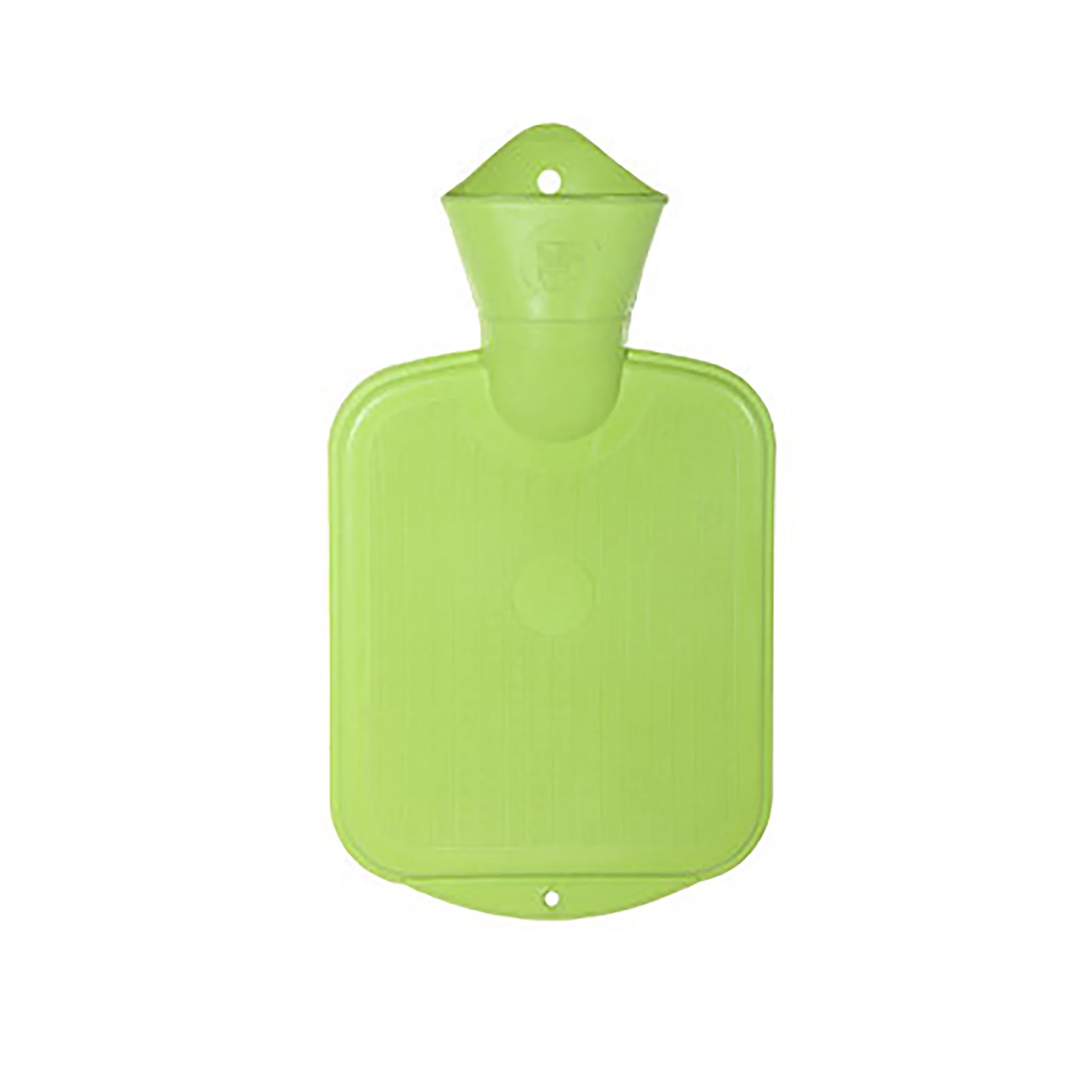
Every detail has been carefully considered to bring you the perfect product.
Details & Craftsmanship
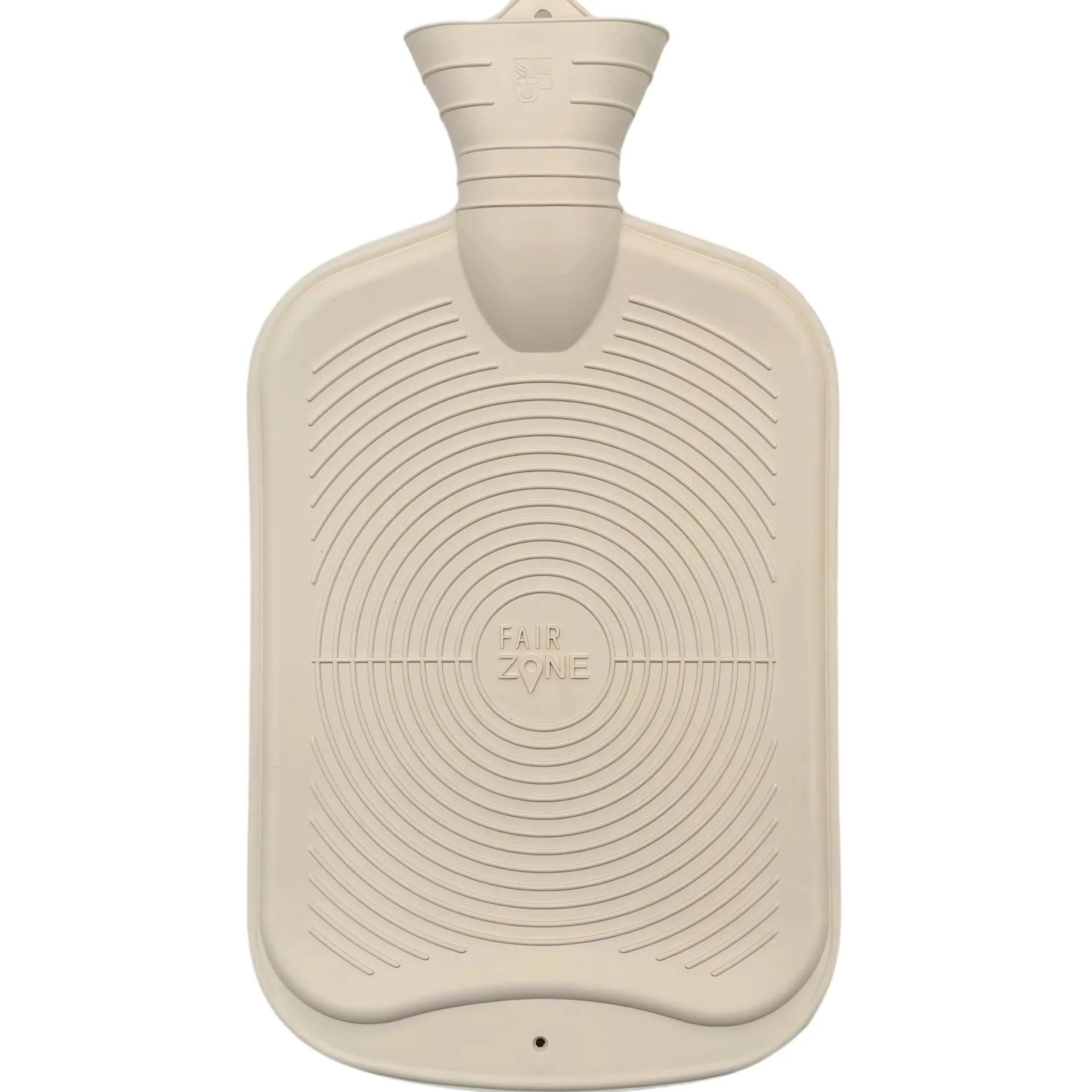
Every detail has been carefully considered to bring you the perfect product.
Details & Craftsmanship
Every detail has been carefully considered to bring you the perfect product.
Description
So, a Hot Water Bottle?
Yes!... well, no?
This isn’t just any old hot water bottle – it’s much more eco-friendly than that.
As you know, a hot water bottle is simply a heat retaining bottle that you fill with hot water, and it helps with easing pain or just keeping you (or your bed!) warm.
But not every hot water bottle is as green (quite literally) as ours. This Chimney Sheep-green hot water bottle is made using natural, FSC-certified rubber, hand-drawn by farmers in Sri Lanka. The Fair Rubber Association then ensures that companies pay a Fair Trade premium for every kilogram of rubber bought. Not only is natural rubber, well, natural... but it's sustainable, renewable and even biodegradable, as it comes from a plant source!
It is recommended that you replace your hot water bottles every 2-3 years, depending on how often you use them and how roughly they’re handled. This itself is a good enough reason why you should choose to buy a hot water bottle made from natural rubber, which is eco-friendly, sustainable and renewable, instead of one that’s made using rubber that’s man-made and harmful to our planet.
What’s the difference between natural and synthetic rubber?
Natural rubber is extracted from the “rubber tree” or Hevea brasiliensis, as latex milk. It is harvested by using a hooked knife and removing a thin layer of bark (about 6.4mm, or a quarter of an inch) in a downward half spiral of the tree trunk, allowing the latex to run down into a collecting cup. It takes a lot of skill to be able to tap correctly, but if done right, the tapping panel can yield latex for up to five hours. The farmers tap during the cool hours of the night or very early morning because when the temperature rises too much the latex will coagulate and seal the cut.
The rubber trees don’t need to be cut down to harvest latex, so rubber tapping is not damaging to the forests. Trees need to grow to be at least 6 years old and 6 inches in diameter before they’re ready to be tapped. Once they’re ready, they’re tapped about once every two days but are often rested, especially after a period of particularly heavy tapping. By doing this a tree can be useful for up to 20 years!
Natural rubber is seen as one of the world’s most essential raw materials and makes up about 30% of the total rubber used annually. It’s hard to say which is “better” when it comes to natural vs synthetic rubber, as both have different properties and are therefore better used in different applications, and both are probably more important than you might first realise (they’re used in medical devices, toys, aircraft and car tyres and all sorts of other things). But it’s easy to say which is better in terms of the environmental impact: natural rubber wins pretty easily. It’s sustainable and biodegradable, rubber trees absorb more carbon dioxide than even the tropical rainforest (because of their leaf density), and it lives a green life – throughout the harvesting, manufacturing, recycling and use.
Synthetic rubber, however, is not at all good for the environment and impacts it a significant amount. All kinds of synthetic rubber are made using petrochemicals such as petroleum and natural gas, using a process called vulcanisation (meaning to harden using sulphur at a high temperature, usually between 140-160°C).
During this process, a hydrocarbon mixture derived from petrochemicals is combined with natural gases to create different types of synthetic rubber. The production of synthetic rubber, like all things produced from non-renewable sources, contributes to our increasing GHG emissions and landfill pollution. In this way, synthetic rubber is just as bad as plastic products.
What is fair trade rubber?
The Fair Rubber Association was founded on June 21, 2012, with the aim to apply the principles of fair trade to products made of natural rubber, so that the tappers and small farmers involved in obtaining the raw latex milk (raw rubber) get help improving their living and working conditions. They currently pay a fair trade premium of EUR 0.50 kg/DRC (Dry Rubber Content). The farmers, plantation workers and tappers decide for themselves how they want to use the Fair Trade premium; whether that be access to clean drinking water, grants for students, or anything else that will benefit the workers.